
Employee Listening & Culture Data
Manager Effectiveness: How to Diagnose Where Your Managers Are Stuck
Paradigm
·

Managers are the most direct lever on performance, belonging, and retention in your organization. Yet most HR leaders have no systematic way to see where manager effectiveness is breaking down until the damage is already done.
The root of the problem is structural. Manager effectiveness signals live across separate systems: performance reviews, engagement surveys, HRIS attrition records, and 360 feedback. Most organizations collect these signals. Very few connect them. Without that connected view, emerging patterns stay hidden until they’re reflected in exits, disengagement, or stalled teams.
This playbook explains how to diagnose manager effectiveness gaps, uncover the patterns traditional reporting misses, and connect workforce insights to targeted interventions and measurable business outcomes.
Why Manager Effectiveness Is a Board-Level Problem
Global employee engagement is declining year on year. But the bigger story sits one level higher in the organization.
According to Gallup’s 2026 State of the Global Workplace, the recent drop in employee engagement mostly comes down to lower engagement among managers. Since 2022, manager engagement has fallen from 31% to 22% globally, including a five-point drop between 2024 and 2025 alone.
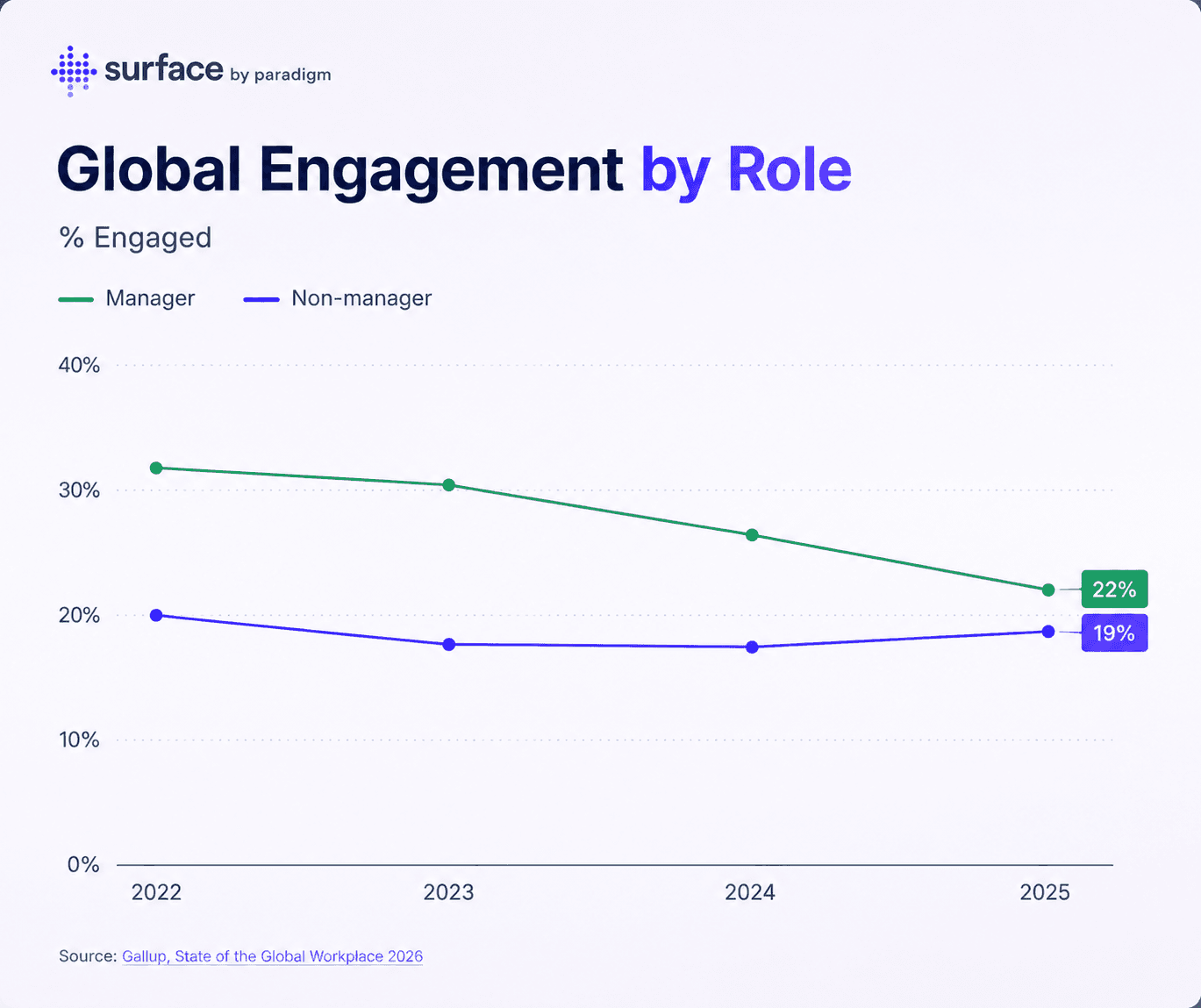
This trend matters because managers shape almost every part of the employee experience.. They influence how work gets done, how feedback is delivered, whether people feel they belong, and ultimately whether high performers stay or leave. When managers become disengaged, those effects ripple across every team they lead.
The contrast with high-performing organizations is striking. Gallup found that 79% of managers in best-practice organizations are engaged at work, which is almost four times the global average. The difference isn’t simply happier managers. It’s stronger leadership, healthier teams, and better business outcomes.
The challenge for most HR leaders is knowing where and why manager effectiveness is beginning to break down. Engagement surveys can tell you that something is wrong, but they rarely show which managers need support, what patterns are emerging, or where intervention will have the greatest impact. That’s what turns manager effectiveness from an HR initiative into a board-level priority.
For HR leaders, this isn’t just a people challenge. It’s a financial one. Manager effectiveness influences who stays, who leaves, how productive teams become, and whether employees feel they belong. Every one of those outcomes has a measurable cost.
Consider voluntary attrition alone. If replacing an employee costs around $30,000, reducing preventable departures by just 2% can save hundreds of thousands—or millions—of dollars, depending on the size of the workforce.
The organizations creating that value aren’t waiting for exit interviews to reveal where managers are struggling. They’re identifying risks earlier and intervening before they become expensive problems.
What Manager Effectiveness Actually Measures
Manager effectiveness is a pattern that emerges when multiple workforce signals are read together. Looking at any one signal in isolation creates blind spots. The real picture only appears when you connect them.
Team engagement scores relative to company averages and industry benchmarks
Voluntary attrition rates by team, manager, and tenure segment
Psychological safety and belonging survey responses
360 feedback themes and skip-level sentiment
Promotion and advancement rates, including differences by identity group within the same team
Performance trajectories of direct reports over time
Most organizations measure some of these signals independently. Almost none connect them. Reading them separately misses the pattern. And the pattern is where the real signal lives.
A connected view reveals what individual metrics cannot: where manager effectiveness is beginning to break down, which teams are most at risk, and where intervention will have the greatest impact.
The Five Most Common Manager Effectiveness Gaps
Manager effectiveness rarely fails all at once. It deteriorates through recognizable patterns long before retention or performance becomes a problem. The question isn’t whether these patterns exist—it’s whether you can spot them early enough to act.
1. Engagement Variance
A manager’s team scores significantly below the company average for engagement and belonging, but no one connects the results to the manager. Team leaders see a culture issue. HR sees another survey. The signal has been there for months, yet no one connects the dots before disengagement turns into attrition.
2. Attrition Clustering
Exits begin clustering around specific managers, but reporting only shows organization-wide attrition. Without manager-level visibility, the pattern remains invisible until several high performers have already left. By then, HR is explaining what happened instead of preventing it.
3. Feedback Avoidance
Some managers avoid difficult performance conversations. The signs appear in low 360 completion rates, recurring skip-level feedback, and direct reports whose performance plateaus year after year. None of those signals is alarming on its own. Together, they tell a very different story.
4. Inclusion Gaps
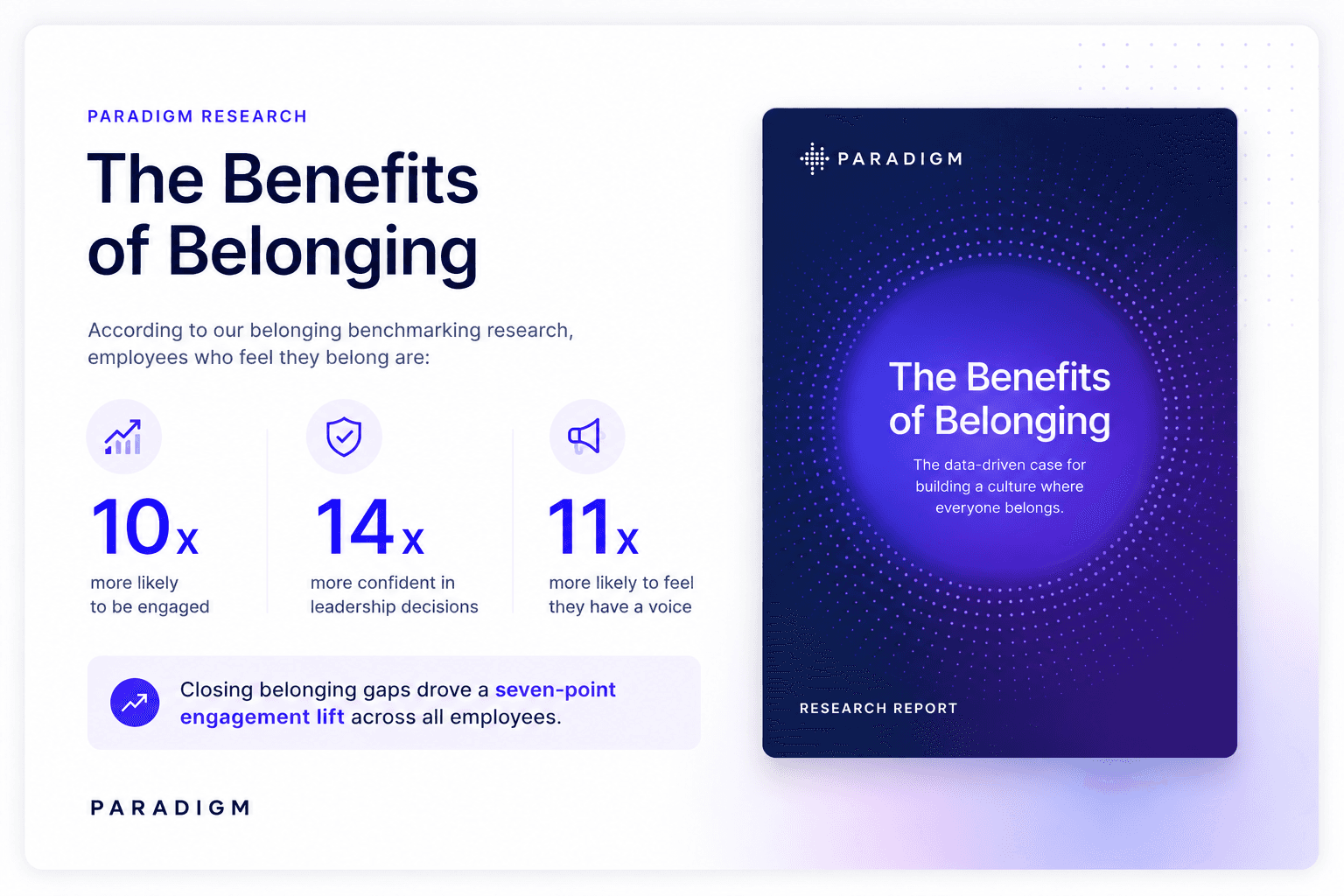
Belonging and voice scores can vary significantly between different groups within the same team. Overall engagement may look healthy while specific employees quietly disengage. Those gaps only become visible when belonging data is broken down and connected back to manager-level context. That’s a costly blind spot. According to Paradigm’s Benefits of Belonging report, employees who feel they belong are 10 times more likely to be engaged, 11 times more likely to feel they have a voice at work, and 14 times more confident in leadership decisions.
5. Development Blindspots
High performers on a manager’s team stop progressing. The manager may not realise it’s happening until those employees start looking elsewhere. That’s an expensive mistake to make at a time when top talent is already becoming harder to retain. According to Workday’s Global Workforce Report, voluntary turnover among high-potential employees has increased across 75% of industries.
How AI Diagnoses Manager Effectiveness Gaps You Would Otherwise Miss
Traditional approaches to manager effectiveness are built around structural lag. Performance reviews happen once or twice a year. Manager assessments rely on subjective feedback. Exit interviews explain why someone left after they’ve already resigned. By the time those signals come together, the opportunity to intervene has usually passed.
AI closes that gap by connecting workforce signals as they emerge. Instead of analyzing engagement scores, attrition data, performance trends, and 360 feedback separately, it reads them together, benchmarks them against peer organizations, and identifies organizational hotspots long before they’re visible through manual reporting.
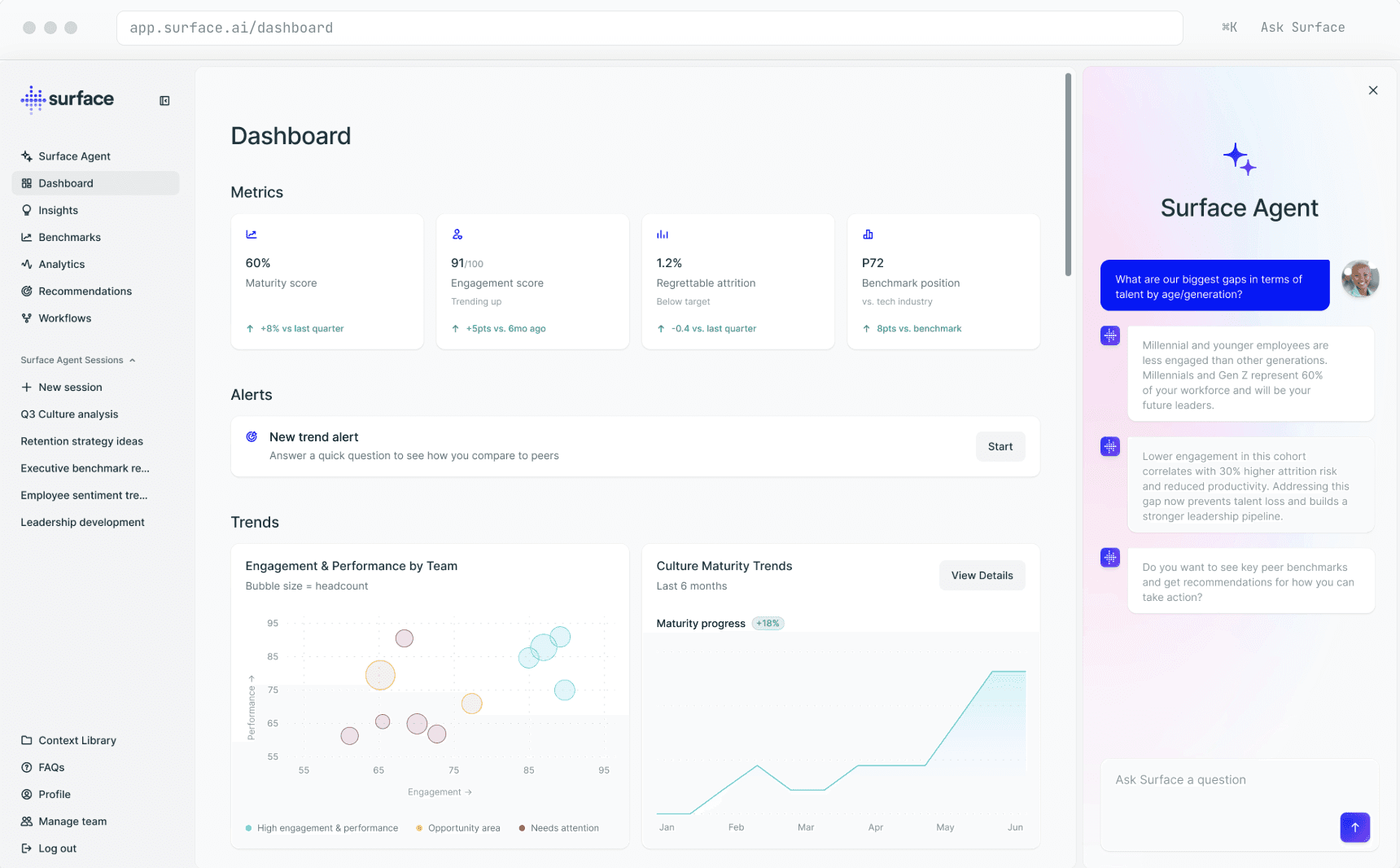
According to Paradigm Surface data, teams with engagement scores below 65 consistently showed higher voluntary turnover three to six months before employees spoke to HR or handed in their notice. That’s the window where intervention is still possible. Once employees begin disengaging or actively exploring other opportunities, retaining them becomes significantly harder.
Speed matters just as much as accuracy. What once required a quarter-long diagnostic exercise can now surface in as little as two weeks. Rather than spending months stitching together workforce data from multiple systems, HR leaders can move straight from identifying hotspots to deciding where to intervene. In one engagement, Surface helped design a manager enablement program for more than 2,000 managers in days instead of months.
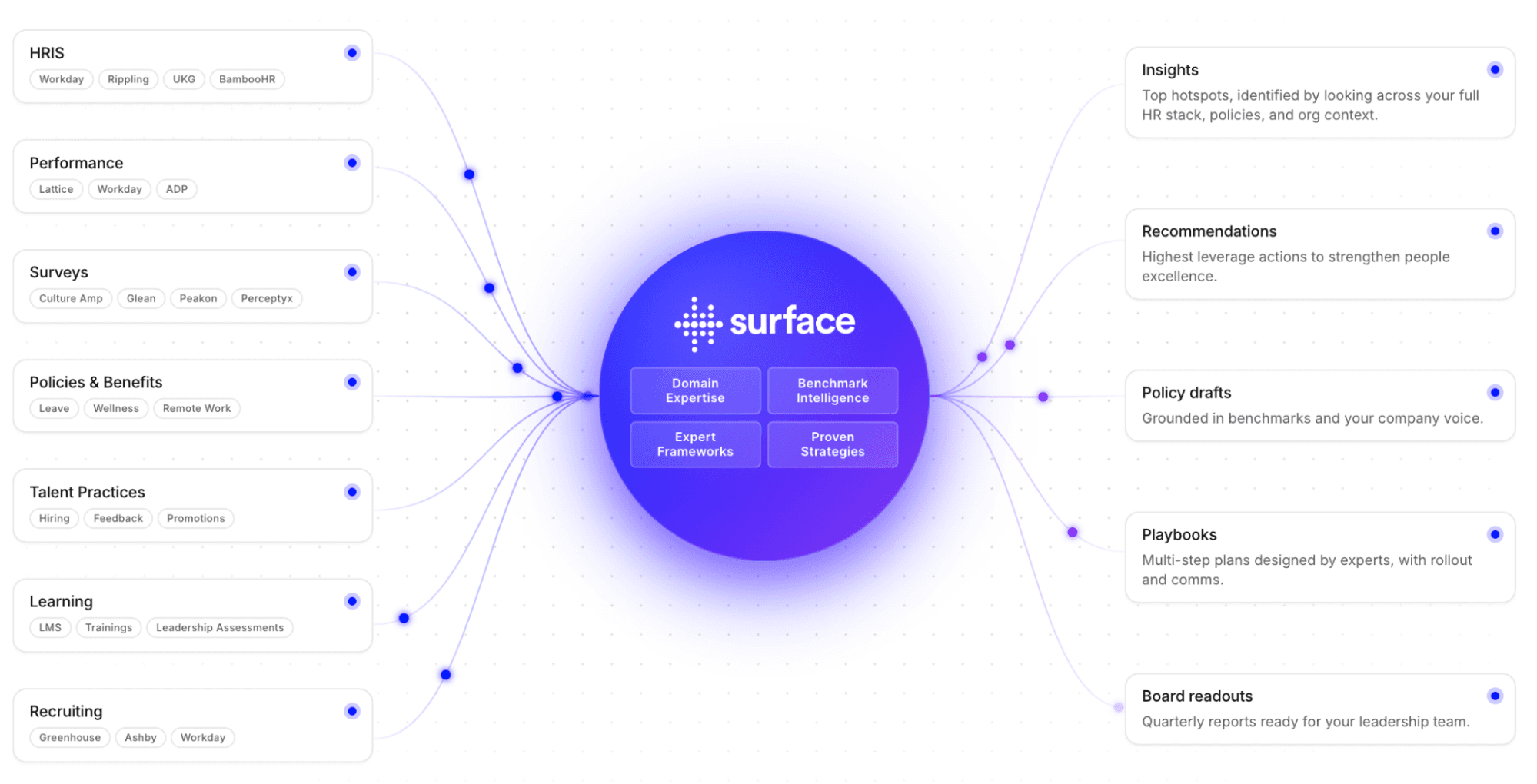
Surface sits above your existing HR systems as a people intelligence layer. It connects the workforce signals you already collect, benchmarks them against peer organizations, and turns them into clear, prioritized actions.
A Diagnostic Framework for Manager Effectiveness
Moving from reactive to diagnostic manager effectiveness doesn’t require a new tool for every workforce signal. It requires connecting the workforce signals you already collect at the right level of granularity.
As talent management strategy evolves, the organizations that separate diagnosis from intervention are better positioned to invest where they’ll have the greatest impact.
Collect the Right Signals: Go beyond performance reviews. Pull engagement scores, attrition patterns, belonging data, 360 feedback, and promotion rates at the team level. Company-wide aggregates hide the patterns that matter.
Benchmark at the Manager Level: Compare individual teams against company averages and industry peers. Year-over-year comparisons show movement. Peer benchmarks tell you whether that movement is a competitive risk or a broader industry trend.
Identify Organizational Hotspots: Which managers, teams, or segments show the most concerning patterns? Prioritize hotspots where the signal is clearest and the potential impact is greatest. The diagnostic tells you where to act first.
Design Targeted Interventions: Match capability development to the specific diagnostic finding. A manager with an inclusion gap needs different support from one with a feedback avoidance pattern. The intervention should follow the diagnosis, not the other way around.
Measure Behavior Change: Track whether team-level engagement, belonging, and attrition signals improve after interventions. Capability development is measured by changes in team outcomes, not whether managers completed every module. A manager who completed every course but whose team’s belonging scores declined by four points is not a development success.
From Diagnosis to Development: Turn Findings Into Action
Not every manager effectiveness gap requires the same response. The diagnostic determines the intervention. A manager struggling with feedback avoidance needs entirely different development than one whose team shows inclusion gaps. The same capability development approach won’t solve both problems.
Surface identifies the gap. Reach delivers the development. The connection between diagnosis and capability development is where the return on a manager effectiveness program actually materializes.
Feedback avoidance → Giving Feedback, Performance Management
Engagement variance → Manager Fundamentals, Psychological Safety
Inclusion gaps → Inclusive Leadership, Belonging
Growth and development stagnation → Leading Cultures of Growth
Communication and conflict → Effective and Inclusive Meetings, Intentional Interactions
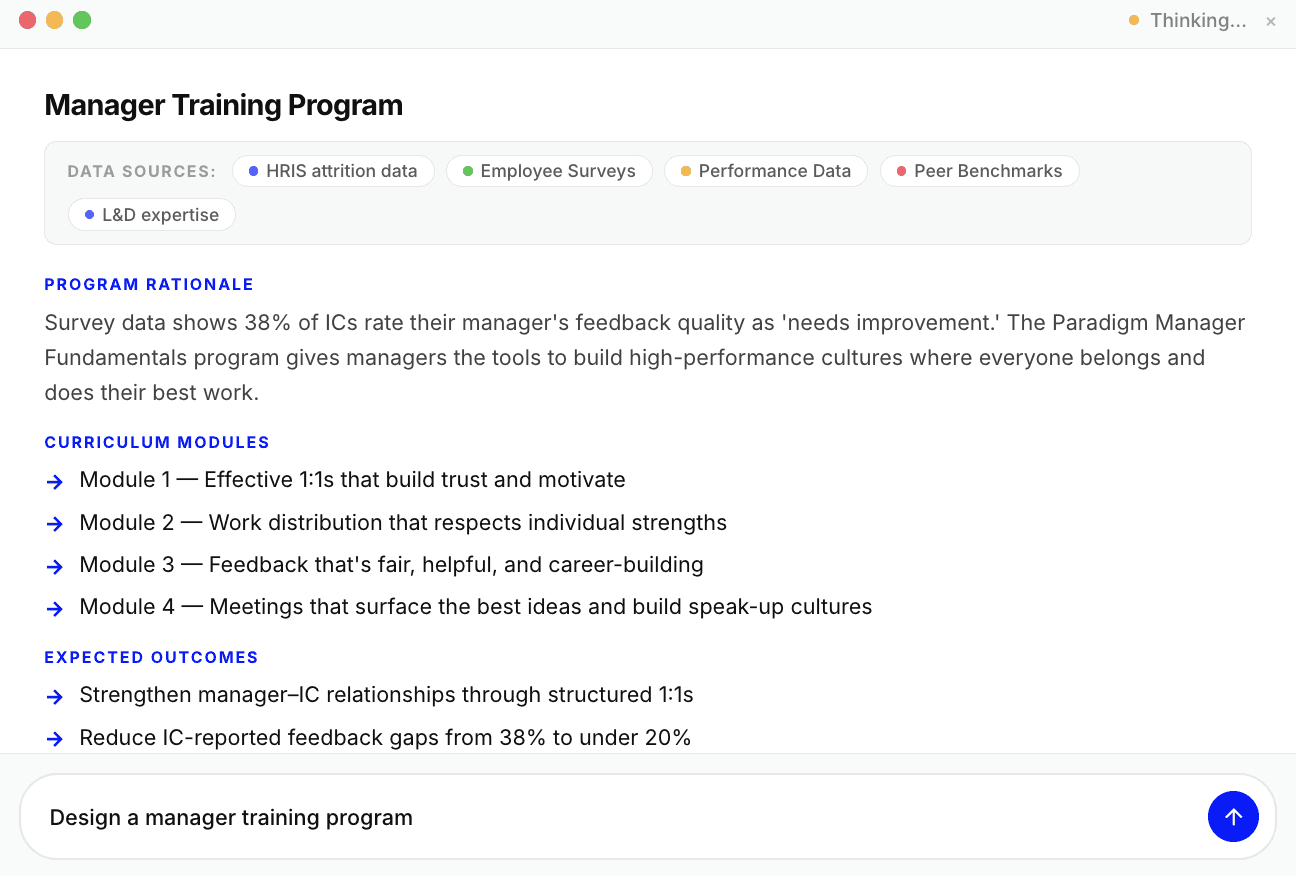
Development tied to a specific, evidence-based diagnosis consistently outperforms generic management learning strategies. Paradigm measures capability development (behavior change over time) rather than module completion. The real question is whether the workforce signals that prompted the intervention improve over time.
How to Bring Manager Effectiveness to the Board
The evolving CPO role is about translating people intelligence into business outcomes the board will act on.
Manager effectiveness gives you exactly that opportunity, provided you frame it in commercial terms rather than HR metrics.
The Financial Translation
Manager effectiveness variance drives attrition risk, productivity loss, and talent density erosion. Your CFO frames these as financial metrics. You should too. Name business costs that affect revenue, performance, and growth.
The CFO’s Calculation
A voluntary departure on a struggling manager’s team can cost more than $30,000 in replacement costs alone. Reduce preventable departures by just 2%, and the return quickly becomes measurable. The data needed to make that calculation already exists within your organization.
The Board-Ready Deliverable
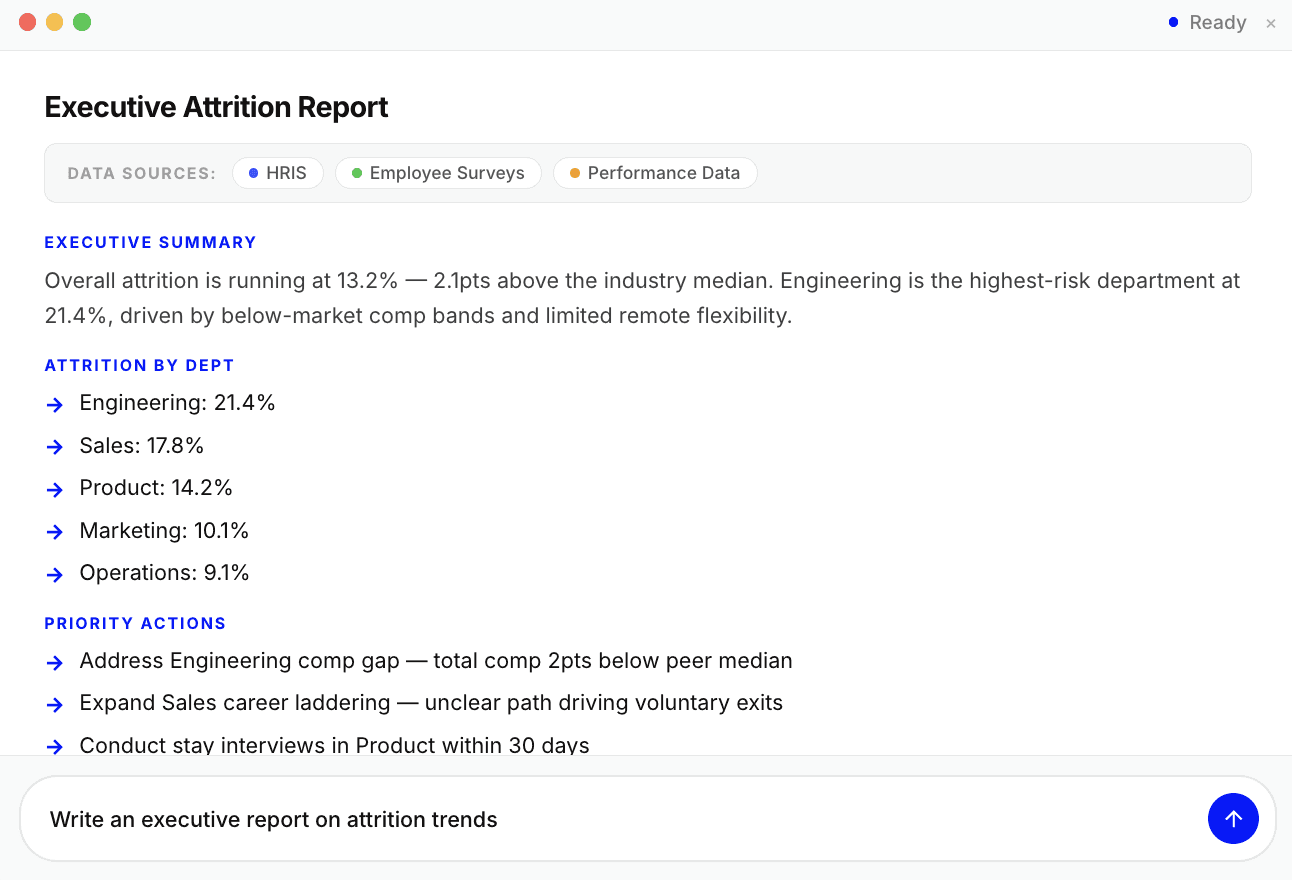
Surface produces stakeholder-ready outputs including organizational hotspots, action plans, policy recommendations, and board-ready reports. What once took months of analysis can now be delivered in days, giving leaders the evidence they need to make faster, more confident decisions.
Gain a Clear View of Where Your Managers Are Stuck
Manager effectiveness isn’t a mystery. It’s a measurement problem. The data revealing where managers are struggling already exists across your organization. AI-native people intelligence connects those workforce signals, turning disconnected data into clear priorities for action.
Surface gives HR leaders a connected view of where managers are stuck, benchmarked against peers, with the action plan to close those gaps before they show up as exits. Learn more at Surface.ai.

Paradigm
Paradigm helps organizations solve their hardest people and culture challenges, through expert consulting and advisory work and Surface, our talent and culture intelligence platform.
View all articles
Newsletter
Expert perspectives on workplace culture, in your inbox
Keep reading
More insights
Employee Listening & Culture Data
Manager Effectiveness: How to Diagnose Where Your Managers Are Stuck
Learn how to identify manager effectiveness gaps using connected workforce signals, before they show up as exits. A diagnostic framework for CHROs and CPOs.

Employee Listening & Culture Data
Dashboards vs. Decisions: When to Use a People Analytics Platform—and When You Need Surface
People analytics platforms show what's happening. Surface shows you what to do about it. A framework for HR leaders who need both and know the difference.

Employee Listening & Culture Data
Portfolio Intelligence: The People Metrics Private Equity Firms Should Be Monitoring
PE firms monitor financial performance across the portfolio. Most don't have the same visibility on people metrics. Here's the framework and why it matters.